Blog
Repair or Replace: Older Garage Doors Around Aiken
A look at when a 1960s or 70s Aiken garage door is worth repairing versus replacing, based on the area's housing age and mild climate with occasional freeze.
What Most People Get Wrong
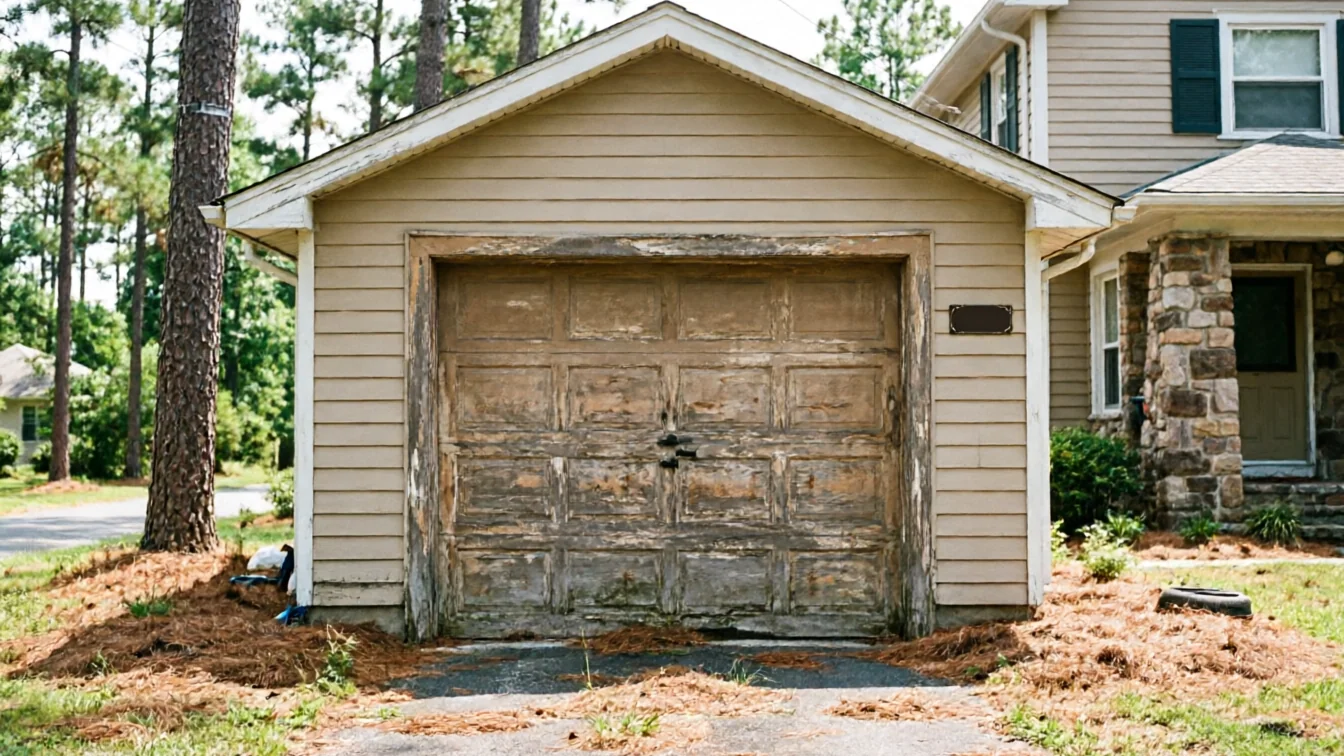
The first assumption we run into is that an old door means a dead door. Most houses in the Aiken area went up between 1957 and 1989, with the median build year sitting around 1974, so a huge share of what we work on is original equipment or close to it. People see a dented panel or a noisy roller and figure the whole unit is on its way out. Usually it isn't. A steel door from that era, even one that's been repainted twice, is often built heavier than what's sold today, and the track and drum hardware underneath it can be rebuilt piece by piece without touching the door itself. What actually kills these doors is neglect of the moving parts, not age of the panel. Rollers dry out, hinges loosen, cables fray at the bottom bracket, and none of that means the door is finished. It means nobody's lubricated it since it was installed. We'd rather tell you to grease four hinges than sell you a door you don't need yet.
When It Stops Being a DIY Job
Torsion springs are where we draw a hard line. On a door from the 1960s or 70s stock that's common across the ten areas we work in, the spring is almost always under more tension than people expect, wound onto a shaft that's had decades to rust at the set screws. Loosening or winding that spring without the right bars and a stable ladder position is how people lose fingers, not an exaggeration we use to sell service calls. Anything involving the spring, the cable drums, or the torque tube is ours to handle. Lubricating hinges, tightening a loose track bracket, or swapping a worn weatherstrip is reasonable DIY territory if you're comfortable with a ladder. The honest limit: if the door is off its tracks or a cable has already snapped, stop and call. Pushing a misaligned door back onto bent track usually turns a one-part repair into a full track replacement.
The Situation
Aiken sits in a service area of roughly 20,921 households, about 11,577 of them owner-occupied houses, which matters because an owned house gets maintained differently than a rental. Median household income across the area runs about $51,180, which is part of why we lean toward repair when a repair genuinely solves the problem. We cover Aiken itself along with the nearby communities of Gloverville, Graniteville, New Ellenton, Burnettown, Clearwater, Belvedere, North Augusta, Jackson, Trenton, and Williston, spanning roughly five to twenty miles out. Housing stock across that whole stretch skews the same way: 1960s and 70s construction dominates, which means a lot of single-car and two-car garages built with hardware specs that don't match what's on the shelf at a big box store today. That's less of a problem than it sounds. It just means whoever opens your garage up needs to recognize an old drum style or a non-standard track radius before ordering parts, instead of guessing.
What the Weather Here Does to It
Aiken falls into a mild climate band with occasional freezes, not the hard freeze-thaw swings that split concrete slabs and crack steel tracks further north. That's good news for the door panel itself. It's less good news for exposed steel hardware. Humidity sits high for a lot of the year here, and that combination of warm, damp air with the occasional overnight freeze is exactly the condition that promotes surface rust on torsion springs, hinge pins, and roller stems, especially on doors original to houses from the 1957-1989 build window. We see springs that look fine from the floor but have pitting under the coil where moisture's been sitting. It's not catastrophic weather, it's slow weather. The fix is routine, not dramatic: wipe down and lubricate exposed hardware a couple of times a year, and don't ignore a spring that's started to show orange along the coil. Left alone, that pitting is what eventually causes a spring to snap without warning.
Questions
Common questions
Is it worth fixing a garage door from the 1970s instead of replacing it?
Usually, yes. Doors from that era are often heavier gauge steel than current builds, and most failures are in the hardware, not the panel. If the panel itself is dented or rusted through, replacement makes more sense. If it's springs, cables, rollers, or a bent track, repair almost always costs less and holds up fine.
Why does my garage door hardware rust if it barely freezes here?
Aiken's climate is mild with only occasional freezes, but humidity stays high most of the year. That damp air sitting on exposed steel hardware, especially torsion springs and hinge pins, causes slow surface rust even without hard winters. It's a moisture problem more than a cold problem.
How do I know if my old door's track can even be repaired?
A lot of houses in this area were built between 1957 and 1989, and the track radius or drum style on some of those doors doesn't match what's stocked today. It's usually fixable, but whoever looks at it needs to identify the original hardware spec before ordering parts rather than assuming a modern match.
Recommendation
You Might Also Like
More garage door guides for Aiken homeowners.
What Aiken's 1960s and 70s Housing Means for Your Garage Door
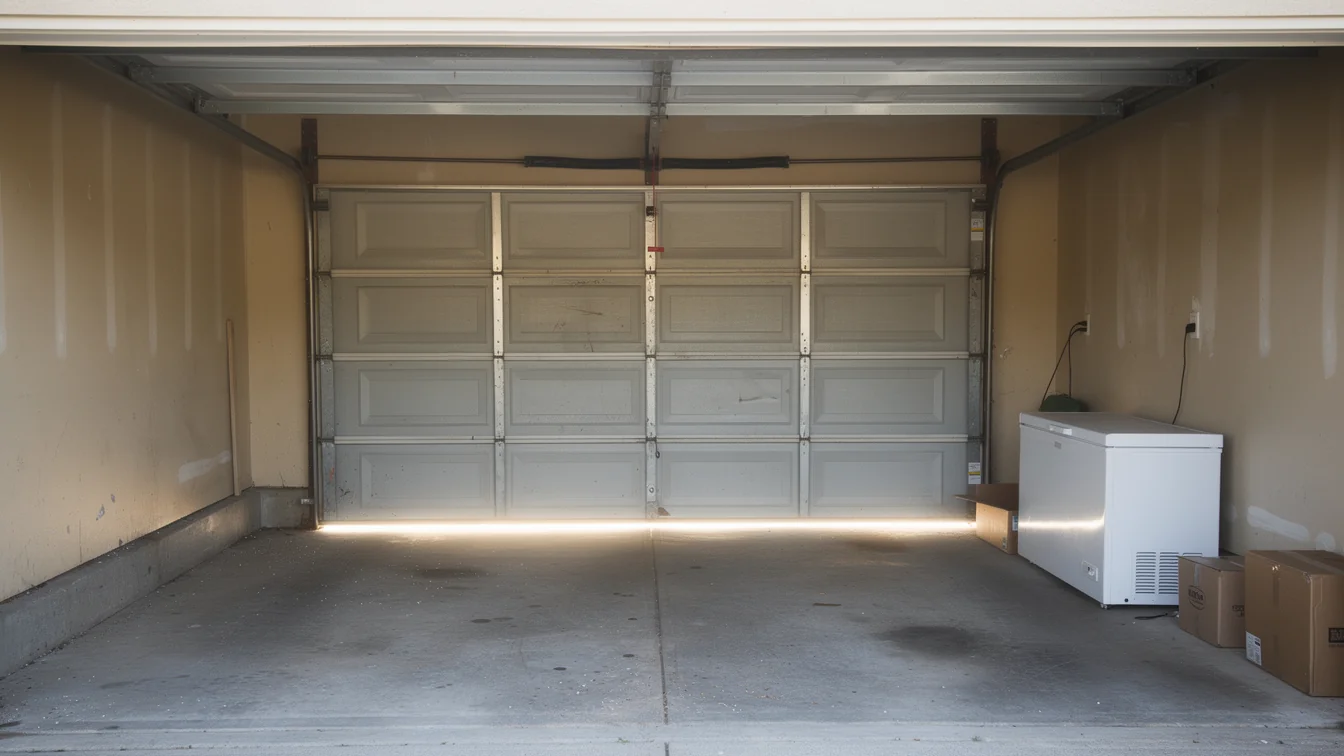
Aiken homes built between 1957 and 1989 often run original torsion hardware.
Read guide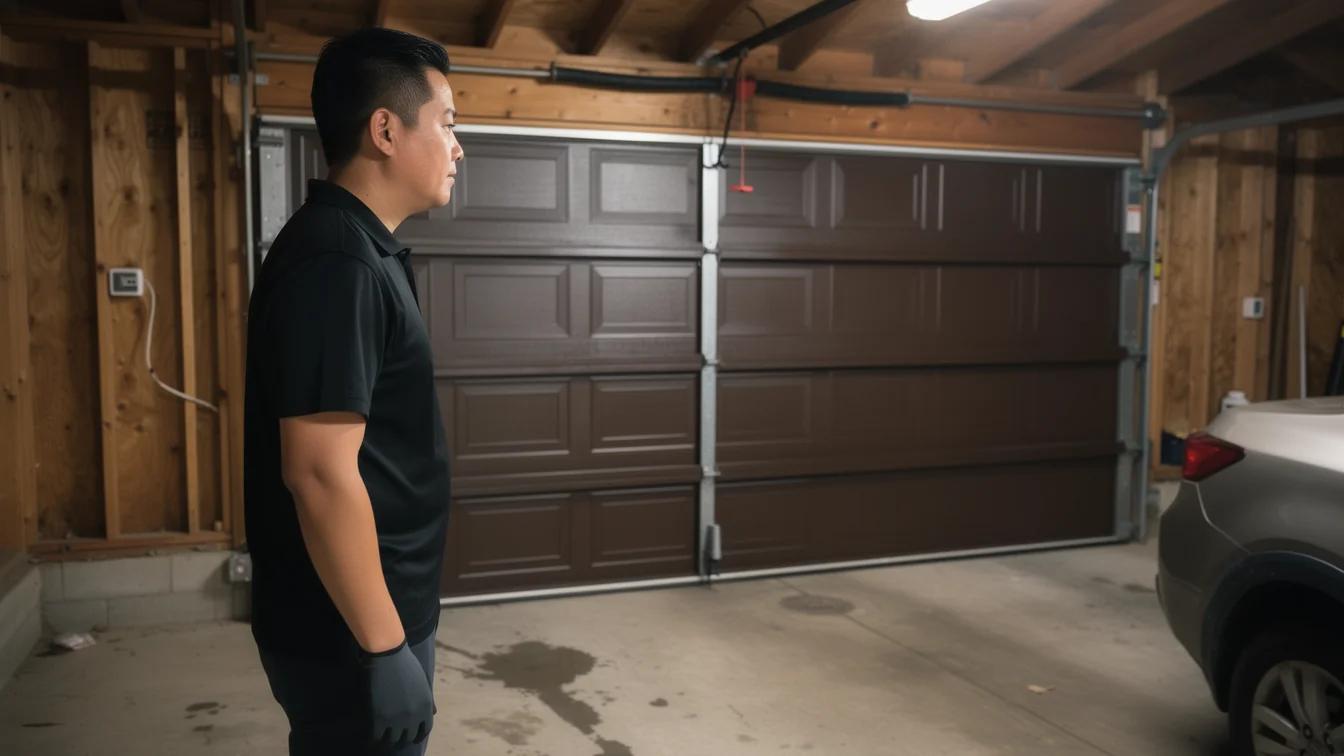
The Noises That Mean Something, House by House
Most Aiken houses were built between 1957 and 1989.
Read guide
What We Actually Check When We Come to Your Door in Aiken
A breakdown of what a real service call checks on Aiken's 1960s-70s housing stock, from spring tension to track wear in the area's mild, humid climate.
Read guideReady when you are
Need a garage door sorted in Aiken?
Aiken Garage Door Pros repairs and installs garage doors, springs and openers in Aiken, SC and the surrounding area.